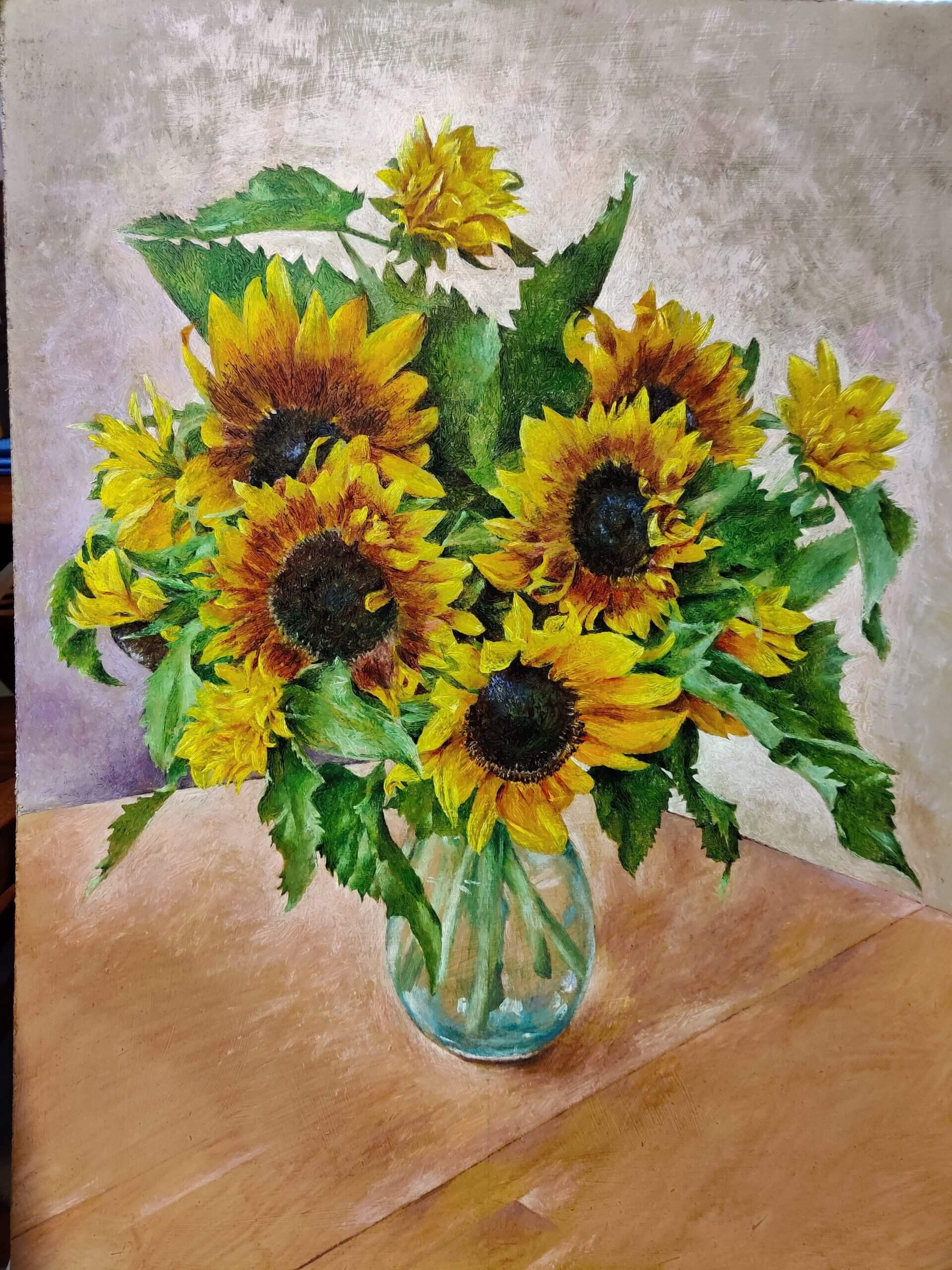
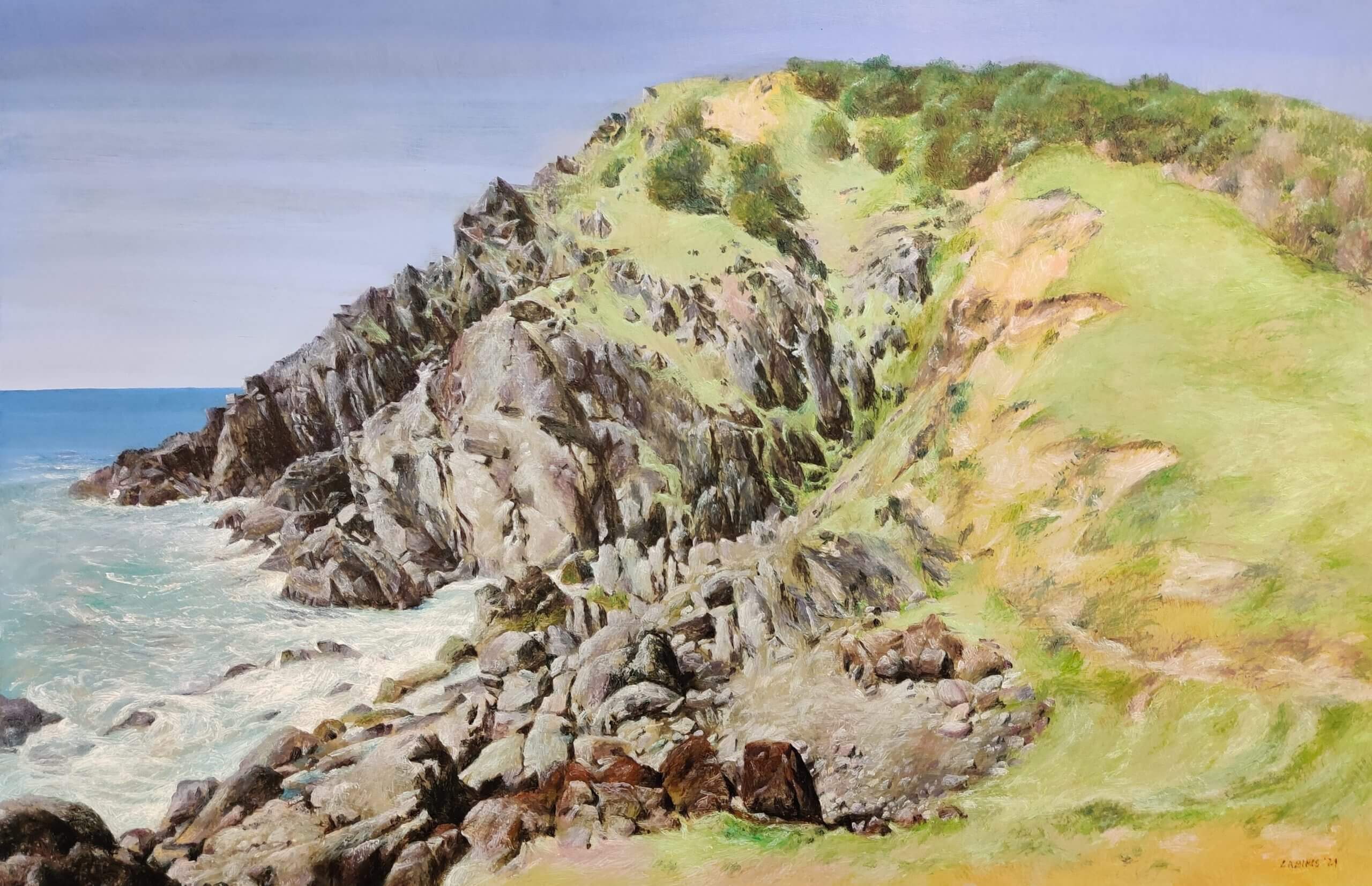
In the beginning I was a keen SLR photographer. Over the years I watched with interest as computers became more and more sophisticated, and was intrigued from my very first Mac Plus by the possibilities the new technology was opening up. I enjoyed playing around with the (now-primitive) Mac Plus graphics programmes.
I forget exactly how it happened, but, for one of the editions of Antipodes which I edited, I had no drawings from Nikos Kypraios and so I resorted to my Mac Plus and created drawings on it for the magazine. (See Antipodes no. 25/26, Dec. 1989.)
Over time the capabilities of computers grew until it became possible to go beyond crude line and dot drawings to full colour pictures, and photographs manipulated with such precision that the manipulation is undetectable. One could blend many photographs to create pictures of imaginary scenes, and integrate that with graphic-art creations, themselves often digital. This was a dream come true.
I coined the term “photo-graphics” for this new art form with its endless possibilities, and it is the field I work in, in addition to straight photography. My output ranges from photographs—sometimes digitally enhanced—to digitally created “paintings”, and everything in between.
Soula is an artist and designer based in Melbourne, Australia.
Soula has a great love for both design and the visual arts. Beginning her professional career as creative director of ooi.com.au, a design company she owns together with her husband Theo, Soula also had the opportunity to exhibit her fine art paintings and prints at various Melbourne galleries.
Soula explores different bodies of work through many mediums, initially beginning by sketching before progressing works in acrylics and oils, various printmaking forms and egg tempera where subject matter permits.
Through whimsical characters, building facades and/or streetscapes, Soula’s subjects reflect her cultural heritage, travel, and personal life experiences – one of which is living with chronic pain.
A sea change from Melbourne now sees Soula Co Directing Queenscliff Gallery (QG) with her husband Theo on the Bellarine Peninsula. Soula more broadly applies her fine art and design experience by curating exhibitions and managing QG’s brand and identity.
Soula is represented by QG, housed in an 1868 Wesleyan church space. Her work is available at both the QG and The Convent Daylesford.
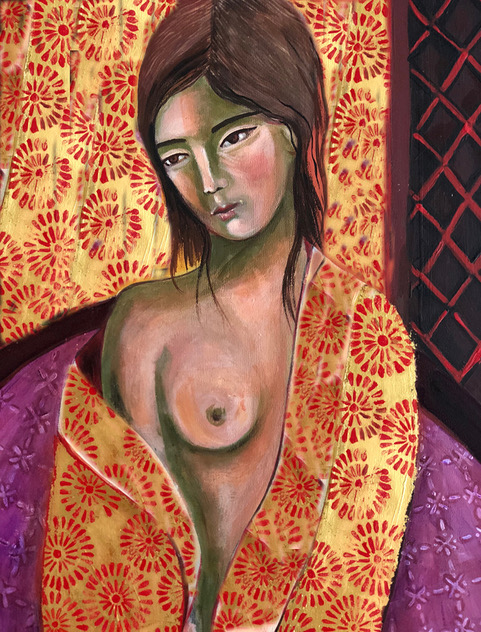
Katrina Ginis is a visual artist currently residing in Melbourne. With a parental background from both the Peloponese and Mytilene, her original heritage stems from Asia Minor.
Painting, drawing and the visual arts in their many and varied manifestations have been a source of fascination and an integral part of Katrina’s identity. Her personal aesthetic is predominantly figurative and representational and her practice largely centres around painting and drawing, working with oil, acrylic, watercolour, pencil and pastel.
She regards her creative practice as a means of self-expression which enables her to engage with and explore the beauty and complexity of existence. Her creative work is informed by her cultural heritage and her research as a scholar of Psychology. She finds great inspiration in Greek art, iconography, history, philosophy, literature, and mythology.
In 2012, Katrina was shortlisted for Top Arts and attained a perfect score of 50 and a Premier’s Award for her secondary school studies in Art. She was a finalist in the 2015 Manning Art Prize, finalist in the 2020 National Capital Art Prize and awarded the Tolarno Hotel’s annual acquisitive prize for 2015.
Katrina has presented at visual art related conferences at Melbourne’s Monash University and at The Unviversity of Melboune’s ‘Women, Art and Feminism in Australia since 1970 Symposium’. She has completed private commissions for original works, portraits and freelance illustrative projects and has exhibited works at various galleries including The Manning Regional Gallery, Gallery Voltaire, The Black Cat Gallery and Linden Gallery.
Love of the visual arts especially colour and pattern, inspired by both ethereal and earthly beauty has always captivated me.
My yearning to interpret the external world and my internal world , through the visual medium, is what gives me joy. It also helps me make sense of life’s journey. By drawing on my life, including my upbringing (family), my schooling, my travels, my daughters and husband, I am never at a loss for inspiration, for subject matter. It is also these very relationships and experiences that drive my desire to visually capture those reflections.
Thematically I take inspiration from these influences and the myths and legends of my heritage. Here I draw on the power and allure of the ancient goddesses and see these elements in all women today: by reflecting on the past, my art keeps me firmly rooted in the present.
My love of Matisse’s odalisques, religious iconography and Japanese woodblocks have all inspired how I approach my subject matter. Their serenity and stillness in a moment of contemplation and reflection (however fleeting that moment is). I like how they capture the transcendental in the ordinary.
The artform of pyrography allows me to celebrate a simple decorative style, letting the lines and colours work alongside the natural surface of the wood (something of the earth and so earthly) to tranquilly co-exist. I enjoy the interchange between materials and techniques, including, the egg tempera technique and the gilded glass technique of ‘verre eglomise’ that was predominant during the Renaissance period. My studio practice is continually evolving and I enjoyed my most recent intersection between the manual and digital mediums. The product a hybrid of analogue and digital montages, that so closely paralleled our world as we are living it today.
My art is simultaneously decorative, serene, sensual and grounded.
My plans are to extend my subject matter further into the realms of the imagination and to organically allow the interchange between materials and techniques and to allow myself to escape in the process and learn from where this journey takes me. Every stage illuminating the way. I find beauty and mystery in all aspects of life and that is why I pursue this enigmatic path and build on the mystery of storytelling.
Monash University Bachelor of Arts 1985
Monash University Diploma of Education 1986
Monash University Bachelor of Arts (Graphic Design) 1992
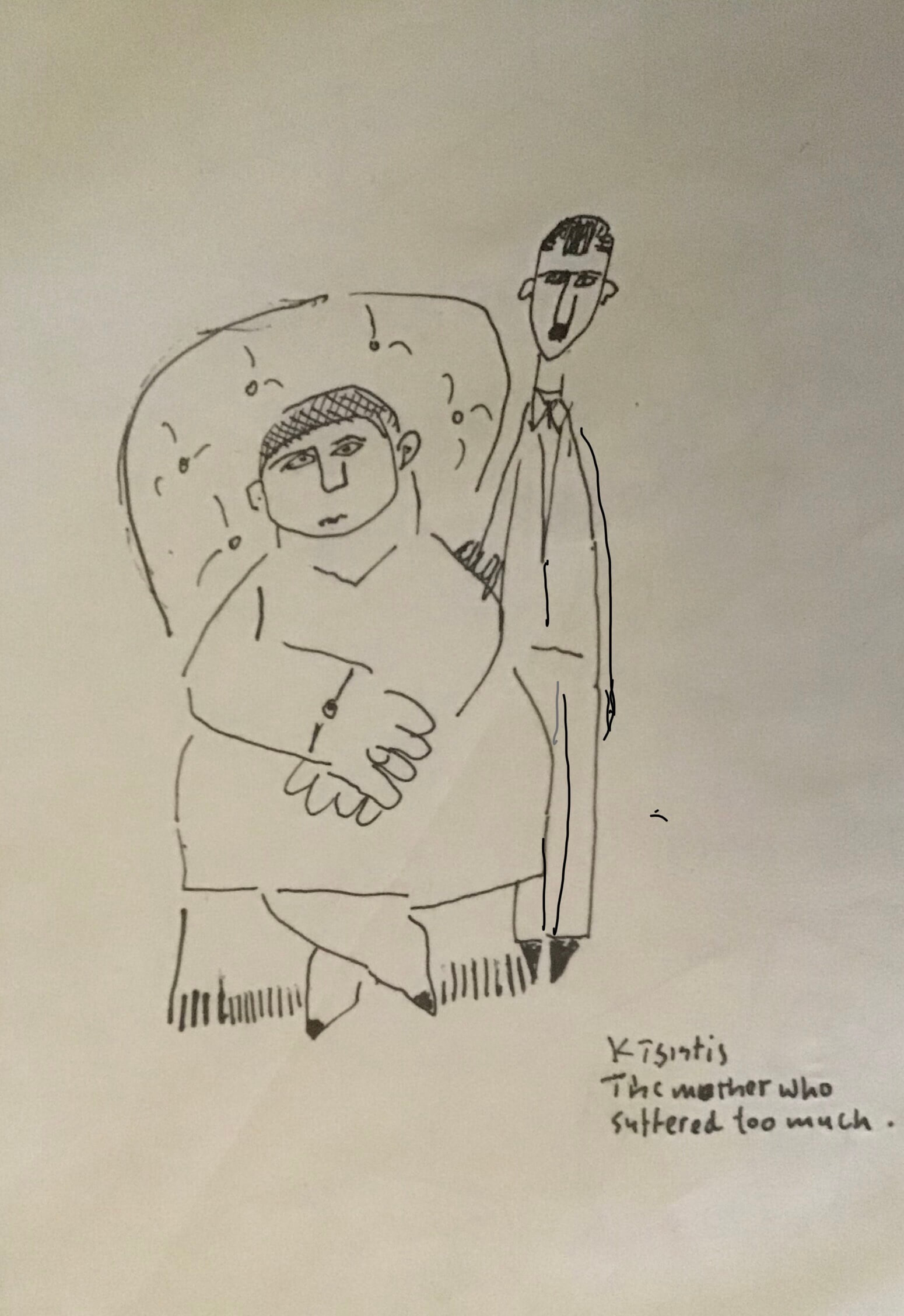
I believe in the free minded artist who in spite manifestos allows for a journey to take place, unknown, fearful and lonely, driven by a stimulus, recounting memories of his experiences of sorrow, pains, fears, doubts, the conscious and subconscious together, facing the challenge of planning the means of colour, form, space, balance, crescendos, materials, to deliver the essence and the magical poetics.
I completed my Tertiary studies as a scholarship recipient, at the School of Fine Arts Athens Metsovio Polytechnio. I majored in Painting and Theatrical Set Design under the guidance of Yiannis Moralis , Dimitris Mitaras and Vassili Vassiliadis.
As a practising artist I exhibited in solo and group exhibitions, got involved in architectural public projects, theatrical performances , children book illustration as well as Art projects for children.
I was born in Anninata, Kefallonia in 1936 and arrived in Australia 30 years later in 1966. I always had an urge to work with wood – to sculpt it, sand it and carve it. In 1970 I created the ‘Kri-Kri’ of Crete from a forgiving, soft wood and in 1971 the classic trireme. A third work was produced in1974 of a Dachsund. I did not refer to imagery or models for these work, nor did I intend to create them – it was as if they needed to be produced based on an internal desire. In the early 1980’s a similar urged prompted me to illustrate graphite images of nature and in time, I moved onto acrylic painting. During this decade, there were significant findings of long lost Chinese sculptures and these prompted me to duplicate one of the a horse’s head that was unearthed. I felt compelled to pursue my wood carving craving, without having had any professional tutoring and without obtaining any formal certification. I feel that I have no choice but to produce these works, as they are called upon from within.
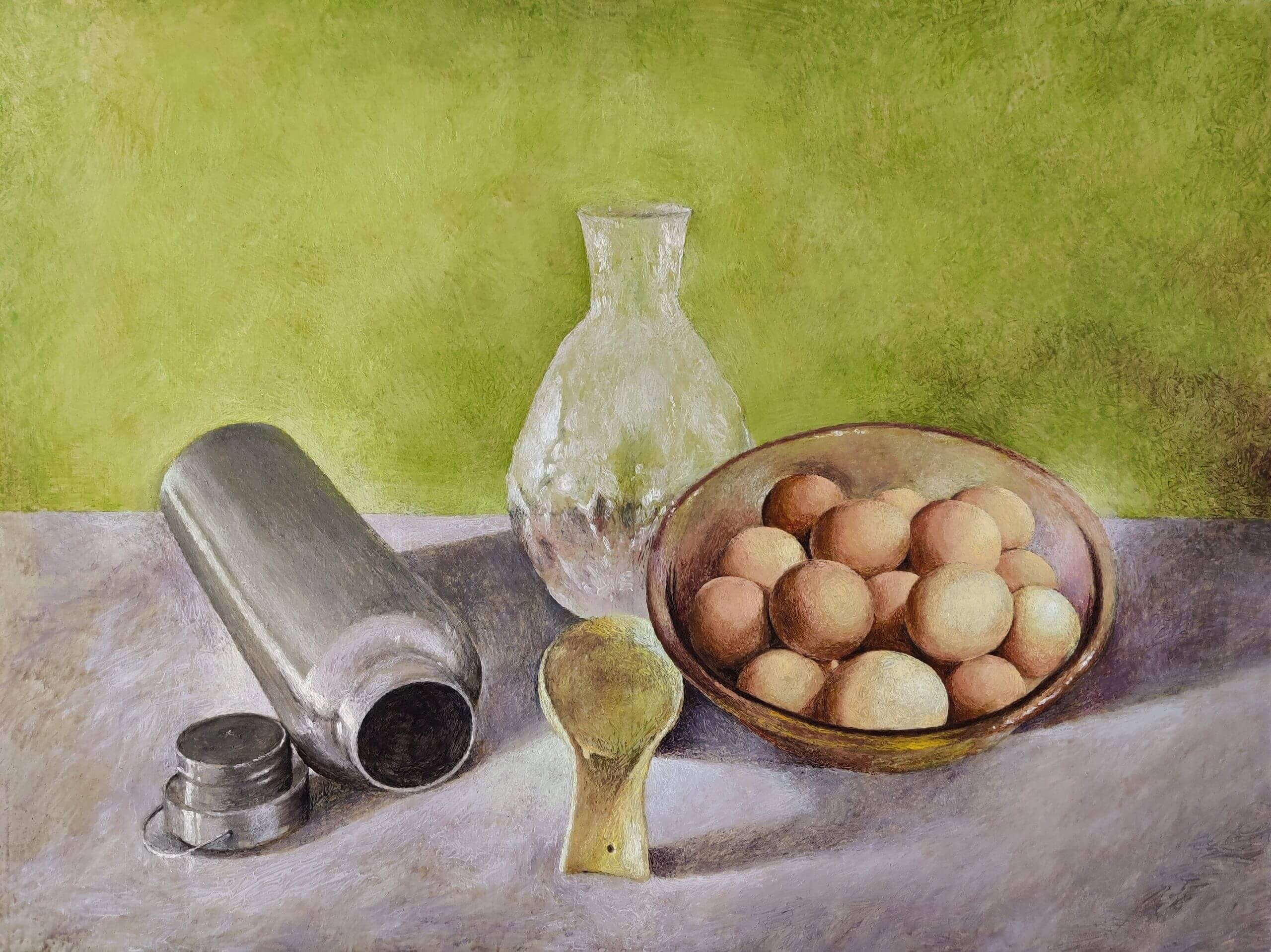
Angy pursued art in high school and attended La Trobe University where he studied Art History. He also took up practical art classes in life drawing at RMIT. After completing his Arts degree and a Diploma in Librarianship, he commenced work in the public library system. He continued his love for painting, initially working with acrylics on canvas, board and various other surfaces. His first exhibition was held during the 1990’s at the Bridge Road Gallery in Richmond, followed by exhibitions at Cotham Gallery 101, Kew and the Tacit Contemporary Art Gallery, Collingwood. He has also participated in a number of ‘Antipodean Palette’ annual art exhibitions at Steps Gallery in Carlton, Melbourne.
“I am basically self-taught. My background in Art History has given me a passion for the works of The Old Masters and their subject matter. I paint mainly on board and at times on canvas. I transitioned from painting with acrylics to painting with oils as I felt acrylics were too restrictive. When I changed medium, I found oil paints too slippery and took much longer to dry. To create a rich textured surface, I developed an impasto technique using predominately sticks, the palette knife and to a lesser extent, the brush…An artist’s aim is to create a ‘successful’ picture, by any means.
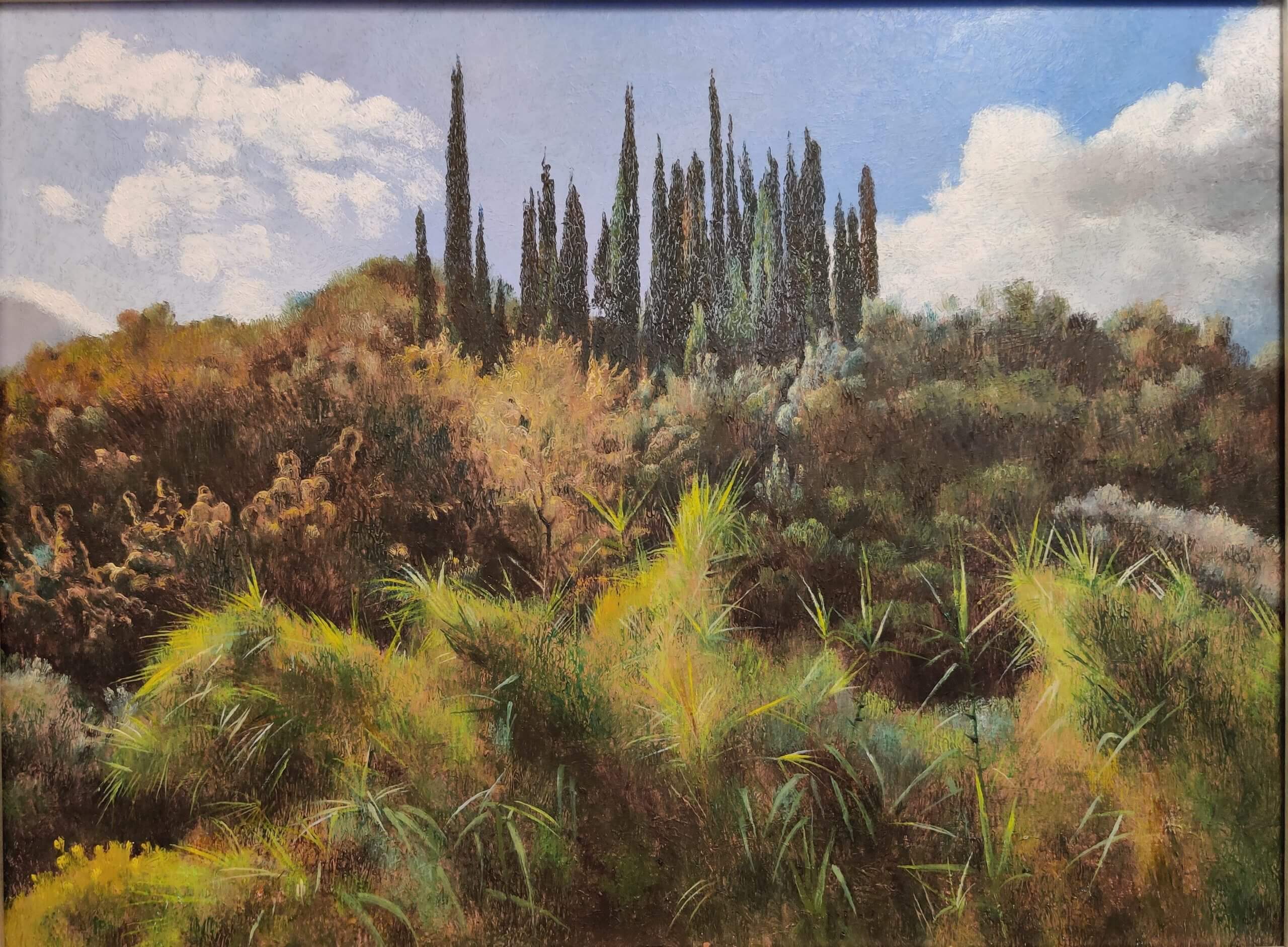
I have always loved creating landscapes and the illusion of being able to ‘enter’ an artwork to explore its rich, colourful, mysterious or sinister world. I hope my work invites viewers to enter my world. I am also fascinated by the ambiguous and abstract forms found in nature.
I was born in Greece and arrived in Australia with my parents in 1965. Lately, I desire to return to my roots and to visit Greece regularly. Fascinated by its landscape, many of my works are scenes of Greece…and of course Australia. Do I see Greece through Australian eyes or Australia through Greek eyes? You decide.”
Stella Grammenos-Dimadis is an award winning writer, director and producer at Medea Films, with a passion for cinematic, provocative and compelling storytelling. Her film work is complemented by her art practice which is figurative and expressive in style. She was awarded her Masters in Film at Deakin University in 2012, after completing two B.A’s, 1988 (La Trobe University), 1991 (Phillip Institute of Technology)- (Fine Art) and a Diploma in Education, 1992 (The University of Melbourne). Her filmography encompasses both drama and documentary which thematically revolves around societal issues, covering themes such as ageing, migration, end of life choices and the healing power of art. She is a member of the Australian Director’s Guild and malvern Artist’s Society.
“There is never a quiet moment in my mind. It is always thinking of ways to move forward with the many societal mishaps that humans are faced with; with this comes a culmination of art that challenges the questions, Have I done enough? Will it ever be enough?”
Recently she has been able to dedicate equal time to both her film work and art practice which has been conducive to her creativity. She has been on the multicultural advisory board of Channel 31, Vice President for Women in Film and Television, Victoria, and in 2018 was the recipient for the Community History Awards by the Royal Historical Society of Victoria and the Public Records Office of Victoria for her online series, ‘Migrant Stories’.
Her art work revolves around four different themes; nature, separated into animals and flowers, fashion with the impacts of consumerism, and consequently the many uniforms that women wear without knowing, as well as an ode to her Greek background.
Inherently the images that she creates at first seem child like and playful, bursting forth with confident brightness, but on closer observation the works are thought out, constructed with images taken from the Western world that she’s inherited. Gold leaf is placed as a means of enlightenment, drawing the viewer to that which is of importance in some way, embellishing the motifs that are used.
Her works show a glimpse of her identity as a woman, mother, wife, friend, artist, filmmaker, business owner, and her navigation of these roles in a Western society that is brandished with brands that consumers, the planet, are constantly exposed to. Whilst she references the world, it is only a reference from her inner responses to it. She is influenced by Jung, revelling in the collective consciousness; the symbols, her dreams, as well as the German expressionists, borrowing the explosive emotions adapted into her art.
When she is not immersed in her film work and art, she is busy with her four adult children, teaching, attempting to turn traditional patisserie creations to a vegan mix, travelling and dancing, the latter for her is an absolute non negotiable in life.
To view more of Stella’s artwork visit https://bastet-galleries.myshopify.com
“In memory of Vlase, whose work had a profound effect on the cultural life of the Greek Community of Melbourne, with the request that the following excerpt and images about the life and work of Vlase Zanalis be used for inclusion in the Greek Australian Art Directory (GAAD).”
Vlase Zanalis was born on the Greek island of Castellorizo in 1902 and migrated to Western Australia in 1914. He would gain national acclaim in 1934 for his “The Birth of a Nation”, but it was his work after 1948 on the Australian landscape and Indigenous themes that dominated his life paintings.
Zanalis’ contribution to the Greek dimension of Australian culture may be partly seen in the iconography of churches across the country. For many Greek Australians it is for his iconography in Greek Orthodox churches in Queensland, NSW and Western Australia that he is best known. Beyond the religious paintings, however, Zanalis captured in sweeping landscapes the contrasting red soils and white trees of the Pilbara, the rugged grandeur of Central Australia and the unique character of the Kimberley.
Midway through his career, Zanalis began a relationship with Aboriginal culture, which dominated his art for the last twenty years of his life. He became one of the first non-Aboriginal artists to value Indigenous Australians and their culture. Vlase Zanalis died in 1973 and was cremated at Perth’s Karrakatta Cemetery, WA.
Vlase (Palassi) Zanalis – a snippet about his artwork and indigenous Australians by Dr John N Yiannakis OAM
These included works of the Kimberley – where he had spent eight months in 1948 camping at Derby, Cockatoo Island, Yampi Peninsula, the King Leopold Ranges and Fitzroy Crossing – and the Northwest as well as his first Aboriginal subjects, painted at Forrest River Mission in the east Kimberley. The visit to Forrest River Mission in 1949 was the artist’s first contact with traditional/remote Aborigines and their art and began a twenty-year fascination with Aboriginal themes for Zanalis.
The subjects of his outback and Aboriginal art were drawn from the fringe-life of Darwin, from visits to Kimberley cattle stations and three Western Australian missions: Forrest River Anglican Mission, west of Wyndham, Mowunjum, a Presbyterian Mission on the outskirts of Derby and Jigalong in the Western Desert which was administered by the Apostolic Church.
Baobab trees, or boabs, feature in several of his Kimberley paintings. The ancient boab at Dadaway lagoon, near the Forrest River Mission village appeared, in at least two paintings. Zanalis knew of the historical significance of the tree. He had been told that the first pastoralists venturing into the area built a slab stone homestead near the tree in 1887. He was shown the cross, carved into the trunk that marked the grave of the first white child born in the east Kimberley.
He is allegedly the first non-aboriginal artist to see the spiritual significance of icons in Aboriginal belief and his Aboriginal portraits form a unique collection in Australian art. Zanalis’ Orthodox background and commissioned iconography from an earlier time gave him a sense of understanding and appreciation of the spiritual depth of traditional Aboriginal wall painting. He had a fascination with the icons Aborigines painted on sheltered cliff walls ten kilometres from Forrest River Mission. But when he applied these to his art, he was not always true to the original.
One painting shows men before a wall decorated with icons that are mostly from Zanalis’ imagination. Much of the wall art, though ‘aboriginal’ in appearance, is too carefully arranged and not true to the original.
Zanalis saw the indigenous Australians as a proud and dignified people and imposed elements of classical Greek culture on his portrayal of them. In several his paintings their stance and appearance are reminiscent of ancient Greek statues of the Olympian gods.
Here’s part of Zanalis’ own reflections on his outback artwork when, in 1967, he wrote to the Assistant Commissioner for Taxation explaining his Aboriginal Memorial Collection comprising 88 paintings:
“Since retiring and receiving my pension I have devoted my time to the study of the life and customs of the Aborigines. Within the last two years I have had two expeditions into the Western Desert. My intention is to record the life of this fast vanishing race, and I happen to be the only artist in the Commonwealth who has penetrated into their life and secret ceremonies.”
The Literary Journal of the “Greek Cultural League”, in 1988, citing an unnamed art critic of The West Australian, said of Zanalis:
“With the death of Vlase Zanalis [1973], the northern Aborigines have lost a true friend, and Australia one of the most dedicated and sincere artists; a man able to get to the inner truth of a subject and put it on canvas. He was a pioneer of the north and of Australian art and his endurance and dedication were in the best European tradition.”
Noted historians, Dr John Yiannakis and Dr Neville Green, reasearched the life of Zanalis and produced a publication entitled, ‘Vlase Zanalis: A Greek Australian Artist’ (LaTrobe University, 2003).
Professor George Kanarakis also wrote a chapter about the artist in his book, ‘In the Wake of Odysseus: Portraits of Greek Settlers in Australia’ (1997).
In memory of Peter, whose work had a profound effect on the cultural life of the Greek Community of Melbourne, with the request that the following excerpt and images about the life and work of Peter Tsitas be used for inclusion in the Greek Australian Art Directory (GAAD).
A deep interest in the environment and how people respond to place is at the core of Peter Tsitas’ work – as an architect and town planner, and an artist and photographer. At first glance, the sleepy coastal fishing village of Warneet, at the head of Western Port Bay, has little in common with the island country of Cuba in the Caribbean. Yet Peter’s response to both reveal an eye trained to look at where and how we live.
While Warneet and Cuba are very different, both are places that have been left relatively untouched by progress. Warneet is quiet, a recreational fishing village surrounded by wetlands fringing Western Port that are internationally protected for the large number of native birds, animals and plants. Peter has been visiting regularly for 30 years and has captured the surroundings in a variety of media in that time.
Whether photographing, drawing, using pen and ink or pastels, the isolated beauty, ebbing tides and wide-open sky has proved a restorative and ongoing fascination for the artist. Not much happens at Warneet except for the tide going in and out, the fishermen standing preoccupied and silent on the pier and the ubiquitous boats sailing the inlet and bay. The mangroves, which are very forceful as they try to assert their dominance, have proved another enduring interest for Peter.
In 2005, Peter travelled to Cuba and based a major photographic series on his experience (Cuba Now! Steps Gallery 2006). These drawings in oil pastel explore habitat and while they contain no people, the presence of the local community seeps through. As a town planner, Peter appreciated the human scale of Cuba’s cities and towns, and the repetition of stylistic elements in the architecture. While Warneet is about nature, Cuba is about how people live; Peter was fascinated by the tight lanes and the constant element of surprise. “You’d walk around a corner, hear singing and all of a sudden you are at a café with live music, people coming together to share food and have fun. The sense of belonging is paramount.